



01/2
Onassis Library
 Foundation
Cultural Center
Affiliate Foundation USA
Scholarships
Public Benefit
International Prizes
Scholars' Association
Library
Cavafy archive


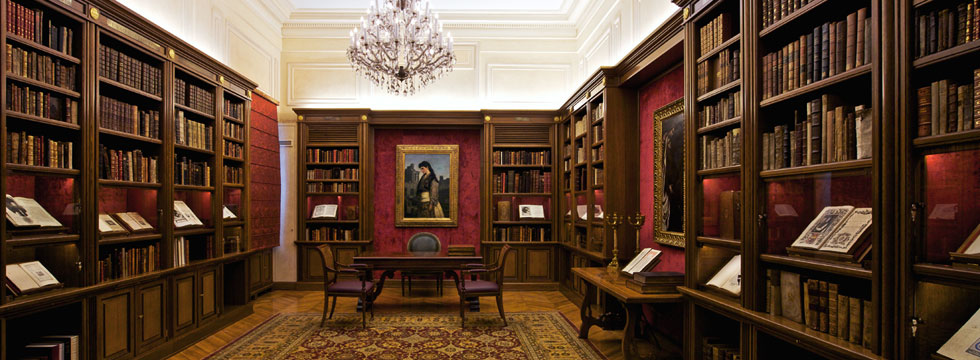
The Onassis Library is housed in a neoclassical building in Plaka (Amalias Avenue 56) and accumulates the Cavafy Archive and two large collections of books: the Hellenic Library (K. Staikos' book collection) and the Travel Accounts book collection.
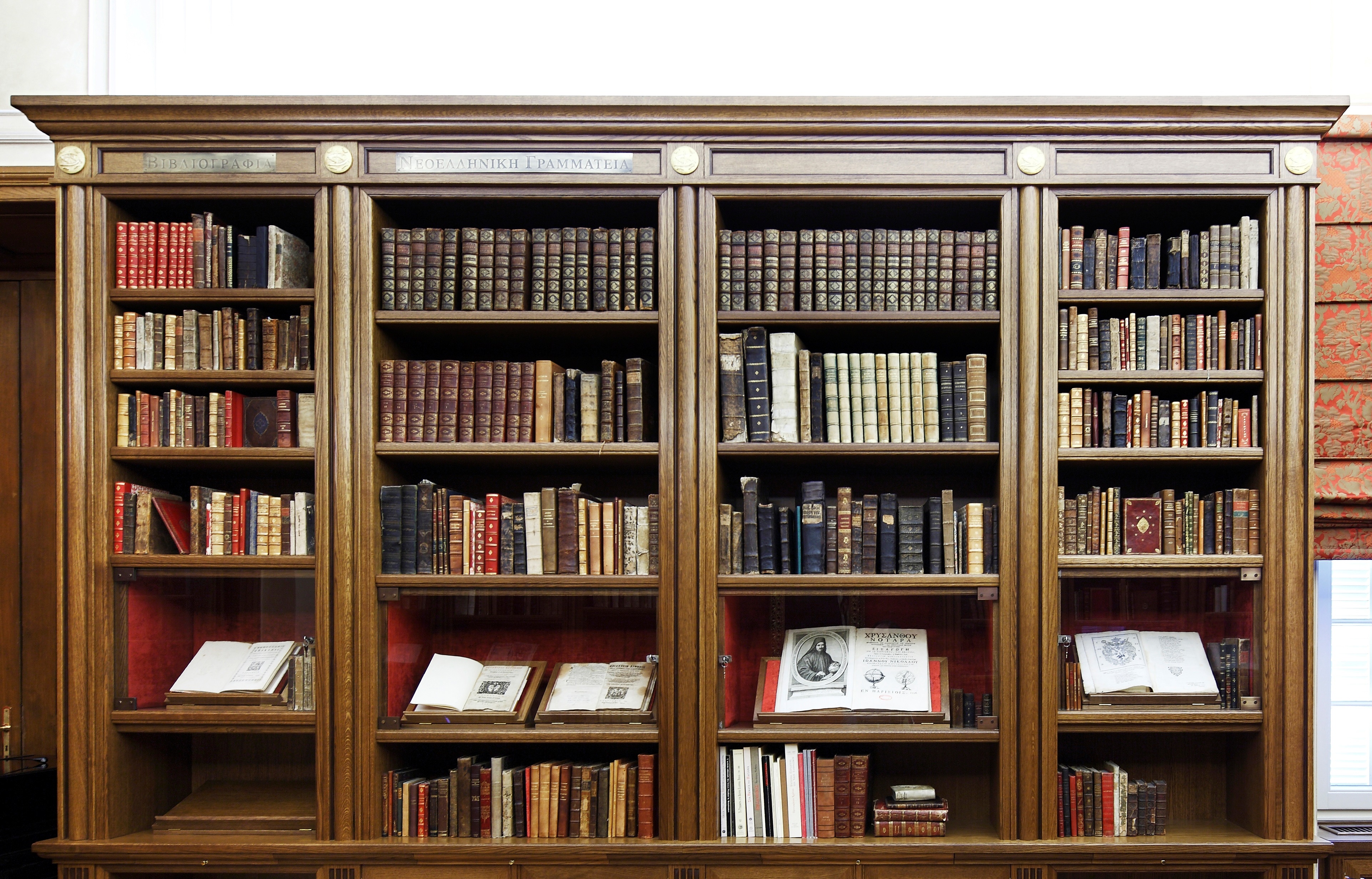
The Hellenic Library book collection consists of books representing the intellectual activity of the Greeks, whether of the secular world or of the Church, from the period of the Italian Renaissance until the late years of Neo-Hellenic Enlightenment, that is to say the period from the outset of the fifteenth to the first decades of the nineteenth centuries. These publications are not confined to purely spiritual quests and the composition of manuals for educational purposes, nor only to issue the books necessary for the conduct of the liturgy in Orthodox churches and matters of dogma, they also comprise texts, bulls, patents and every sort of document legitimizing the privileges of Greeks active in the West and the Orient.
Greeks exercised the art of typography and were occupied in book publishing whether as authors, in literary editing, correctors as well as sponsors at a time when the capital of the empire, Constantinople, had fallen (1453). They were thus initially staffing the Italian publishing and printing centres mainly, in this way contributing to Westerners learning of the Greek language as well as the dissemination of the editiones principes of Ancient Greek writings, in the framework of the spirit of Humanism. Subsequently, already in 1499 they set up printing works under Greek ownership that continued in operation until the early decades of the nineteenth century in Venice. The orientation of their publications altered radically from the beginning of the sixteenth century when Greek printers, publishers and intellectuals set to work to support the scattered Hellenism of the diaspora, printing the books indispensable for maintaining its unity: language, the Orthodox faith and spiritual tradition.
The Library contains more than 2,500 titles, copies of which extend to about 3,000 volumes, classed in six basic entities.
RENAISSANCE – HUMANISM
Ancient Greek authors, Humanist works, grammars, encyclopaedias, dictionaries, philosophical treatises and literary essays.
NEO-HELLENIC LITERATURE
Literary works, poetry and folklore, historical treatises, grammars for educational purposes, literary essays, grammar-dictionaries and every sort of school text book.
LITURGICAL BOOKS
Gospels, Books of Months (Menaia), Psalters, Books of Hours, Pentekostaria, Prayer books et al.
TREATISES OF THEOLOGY
Patristic works by Greek Church Fathers, treatises concerning the Schism between the two Churches, texts on the history of the Orthodox Church, lengthy studies regarding the Orthodox dogma and the Popes Infallibility et al.
NEO-HELLENIC ENLIGHTENMENT
Original works written for the intellectual elevation of the Greek people, Greek translations of works of prose of the world and poetry and examples of the literary and linguistic dispute in the framework of European Enlightenment and the ideas arising from the French Revolution.
ARCHIVE MATERIAL
Letters and decrees of the heroes of the Greek War of Independence, commercial ledgers and revolutionary proclamations of the newly established Greek State.
The Travel Accounts book collection consists of 2.500 editions written by various European travelers describing the Mediterranean area and Southeast Europe from the 16th to the 20th century.
These books, although possessing many elements of fantasy, are a valuable source of information for society, culture, geography, economy, religion and all aspects of daily life of the people that travelers met during their voyages. Moreover, since these books are accompanied by rich graphic material (photographs, engravings, drawings, etc.), they provide significant records of archaeological sites and monuments while composing the local history through the unique view of European travelers.
The Onassis Library has already digitized 100,000 records of its material and has developed two digital applications for web / tablet / smartphone which are freely available at www.onassislibrary.gr .







© 2011-2026 2011-2015 Alexander S. Onassis Public Benefit Foundation, Städtle 27, FL-9490 Vaduz, Liechtenstein T +423 23 50220, F +423 23 50221 | web design & SEO by Mozaik
In order to navigate through the website, please enable Javascript.